Canteen Management System: Complete Guide to Features, Architecture, and ROI for Modern Food Courts
September 17, 2026 in Blog
Managing high-volume dining in food courts, educational campuses, corporate cafeterias, and industrial dining halls is an intense operational undertaking. Food service operators must handle hundreds or thousands of diners within tightly compressed meal windows. Relying on legacy manual cash registers or basic consumer billing apps results in slow queues, cash leakage, food wastage, and accounting discrepancies. Implementing a dedicated canteen management system built with closed-loop RFID smart cards and an offline-first server network transforms high-density food court operations into a streamlined, highly profitable ecosystem.
What Is a Canteen Management System?
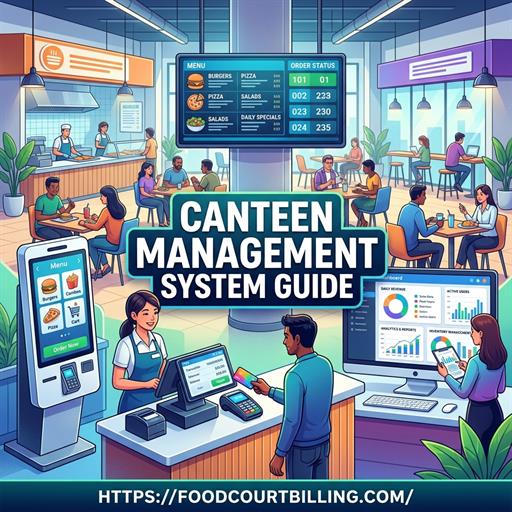
A canteen management system is a specialized hardware and software suite designed to automate food court operations, customer order processing, cashless payments, and back-office inventory control. Unlike generic retail point-of-sale (POS) software, an enterprise canteen management system is engineered specifically for speed, volume, and multi-tenant reconciliation. It unifies order entry, digital Kitchen Order Ticket (KOT) routing, smart card balance auditing, and tenant sales settlements into a single synchronized management console.
Core Architecture: Offline-First Local Servers vs. Cloud Reliance
The technical foundation of a canteen management system determines its real-world success during peak lunch hours. Commercial dining establishments experience extreme transaction surges where hundreds of diners queue up within a 20-minute window. Cloud-only POS platforms depend entirely on live internet connectivity. When internet latency spikes or local ISP connections drop, cloud registers freeze, halting food delivery entirely.
In contrast, a professional canteen management system employs an offline-first hybrid architecture:
- Local Network Server: Primary transactional databases reside on a high-availability local server rack within the facility.
- Sub-Second Execution: POS terminals, card readers, and thermal printers communicate directly across a secure local area network (LAN), processing card taps in under 0.5 seconds.
- Asynchronous Cloud Sync: Financial summaries, sales audits, and inventory deductions automatically sync to centralized cloud analytics in the background whenever internet bandwidth is available.
Essential Features of an Enterprise Canteen Management System
When evaluating canteen software for food courts and large dining halls, facility managers should demand five essential functional modules:
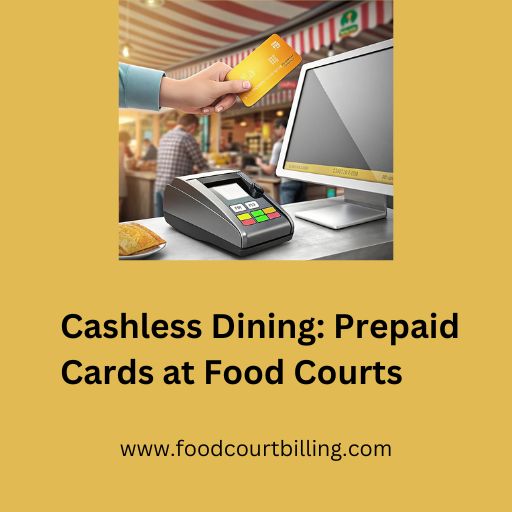
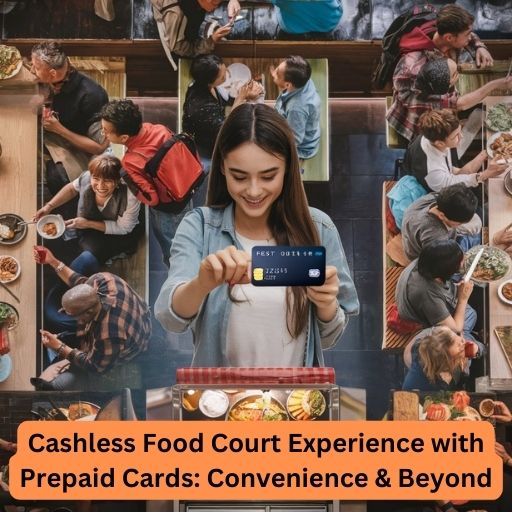
- Closed-Loop Cashless Prepaid Smart Cards: Eliminates physical currency at food stalls. Customers load funds onto reusable RFID cards or wristbands, preventing cashier cash skimming and removing change-counting delays.
- Multi-Vendor Revenue Settlement Engine: Automatically logs gross sales per stall, applies customized contract commission percentages, and generates automated payout vouchers for tenant food operators.
- Automated Kitchen Order Routing (KOT & KDS): Transmits customer orders directly to kitchen display screens or thermal ticket printers at the exact preparation stall, eliminating manual miscommunication.
- Real-Time Raw Material Inventory Tracking: Links billed menu items to recipe ingredient bibles, automatically deducting flour, dairy, and produce to prevent kitchen wastage and theft.
- Self-Service Top-Up & Kiosk Ordering: Integrates standalone touch kiosks and online web portals enabling patrons to check balances, review menu items, and recharge accounts via UPI, debit cards, or cash.
Calculating ROI: How Canteen Software Pays for Itself in 90 Days
Investing in an enterprise canteen management system delivers immediate, quantifiable financial returns across three distinct operational areas:
- Reclaimed Cash Leakage (10% to 15% Savings): Eliminating cash drawers from individual food stalls eliminates unrecorded cash sales, free employee giveaways, and register shortfalls.
- Increased Order Velocity & Average Ticket Size (15% to 25% Boost): Frictionless contactless card taps process 4x faster than cash or QR codes, allowing cashiers to serve more diners during peak hours while encouraging higher impulse food spending.
- Food Waste Reduction (12% to 18% Lower Costs): Automated ingredient consumption logs prevent kitchen managers from over-preparing perishable meals, drastically cutting waste.
Deploy a Modern Canteen Management System
Advance Technology Systems (ATS) provides turnkey offline-first canteen management systems, prepaid RFID cards, multi-stall POS software, and automated revenue-sharing portals.
Conclusion
A modern canteen management system is no longer just a billing tool—it is the central operational engine for any profitable food service establishment. By combining offline-first local server reliability, closed-loop RFID payments, and real-time inventory auditing, facility managers can eliminate queue congestion, protect their revenue, and provide an effortless dining experience for thousands of daily patrons.
FAQs: Canteen Management System Architecture & ROI
- Q1: What is a modern canteen management system?
- A: A modern canteen management system is a specialized hardware and software platform designed to manage high-volume food court dining, multi-counter orders, prepaid smart card transactions, kitchen order tickets (KOT), and automated financial reporting without cash handling.
- Q2: Why is offline-first architecture vital for canteen software?
- A: Canteens face massive footfall during short rush hours. Cloud-only systems freeze during internet drops or latency spikes. An offline-first local network server processes card taps and orders in under 1 second with 100% uptime, syncing to the cloud in the background.
- Q3: How does closed-loop RFID improve food court profitability?
- A: Closed-loop RFID cards eliminate cash leakage, prevent cashier theft, and increase average order values by 15% to 25% because guests enjoy seamless, tap-and-go ordering without physical cash friction.
- Q4: Can a canteen management system handle multiple independent food stalls?
- A: Yes. A central multi-tenant canteen management system routes orders to respective food stalls, calculates individual vendor commission splits, prints automated KOTs, and generates daily settlement sheets.
- Q5: How does the system reduce kitchen ingredient wastage?
- A: Integrated recipe management deducts raw ingredients automatically upon billing, tracking inventory levels in real-time and providing consumption analytics to prevent over-purchasing and spoilage.
- Q6: What payment methods are supported for smart card recharges?
- A: Customers can recharge prepaid smart cards or wristbands via cash at central desks, UPI QR codes, debit/credit cards, or mobile self-service web portals.
- Q7: How are customer refunds handled when leaving the food court?
- A: Unspent balances can be refunded instantly in cash at designated exit desks, transferred back to source accounts via online portals, or retained on reusable smart cards for future visits.
- Q8: What is the expected ROI timeline for implementing a canteen management system?
- A: Most commercial food courts, cafeterias, and institutional canteens achieve full return on investment (ROI) within 3 to 6 months through eliminated cashier theft, faster customer turnover, and reduced kitchen food waste.
Canteen Management System Architecture & Features
Upgrade your dining facilities with our prepaid card software and experience complete operational control.