Food Court Payment System at Carnivals and Melas: What Works in India
June 24, 2026 in Blog
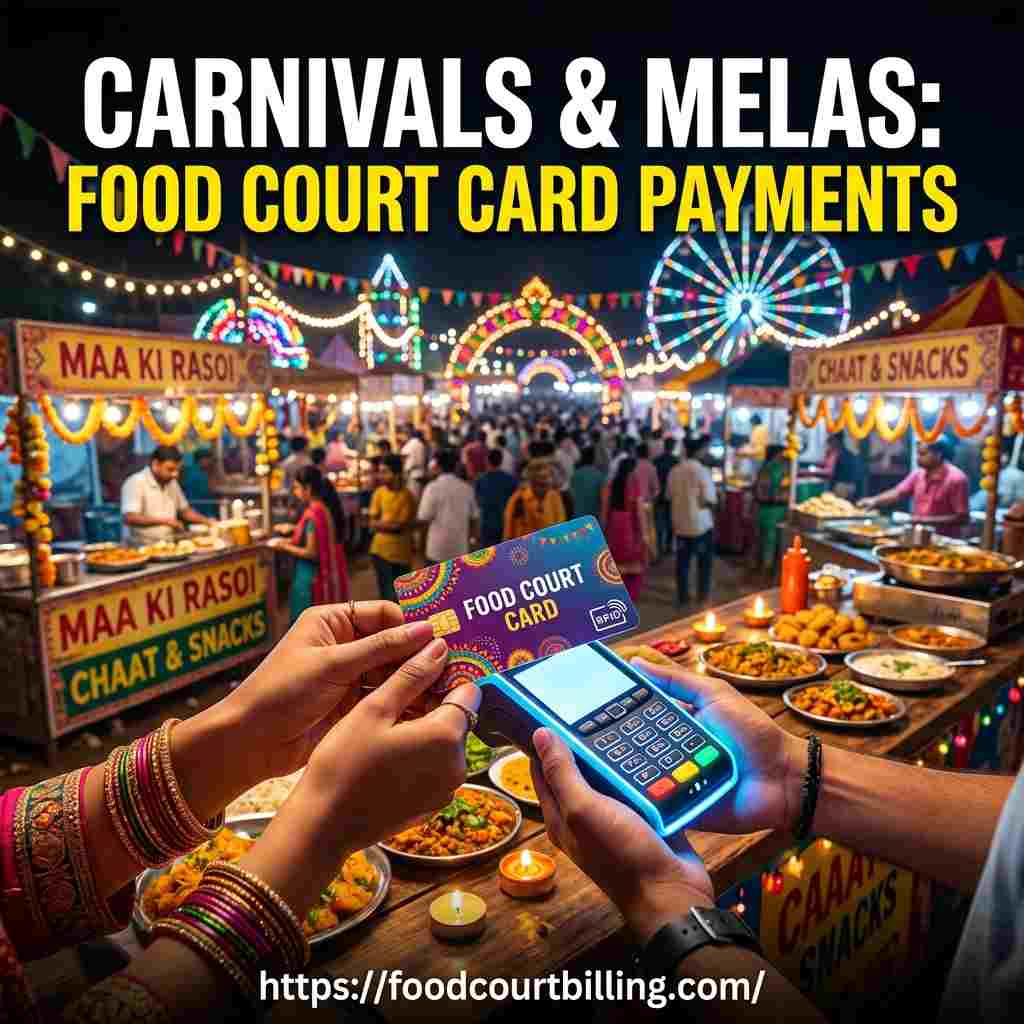
Indian cultural melas, regional food festivals, and exhibitions (such as the India International Trade Fair or local Dandiya/Diwali carnivals) attract massive crowds. Food stalls at these venues generate high transaction volumes, but managing payments in these environments is difficult. While cash is unhygienic and prone to leakage, mobile payments (like UPI) frequently fail during peak times due to network congestion. To ensure smooth operations, organizers need a reliable, offline-first food court payment system.
For event organizers and food festival managers across India looking to streamline billing and secure vendor revenues, transitioning to a closed-loop card system is key. To learn more about our offline RFID billing solutions, visit our Cashless Event Card page.
Why Cash and UPI Fail at Congested Indian Melas
UPI has revolutionized daily payments in India, but it has significant limitations in high-crowd situations:
- Network Overload: When tens of thousands of people gather in one area, local cell towers get overloaded. Mobile data slows down, causing UPI scans to time out, bank apps to hang, and transactions to fail.
- Long Billing Bottlenecks: Waiting for UPI confirmation takes 30 to 60 seconds per customer. In a busy food stall, this delay backs up lines, causing customers to abandon queues and cost vendors sales.
- Cash Discrepancies: Cash transactions require handling small change (loose coins), which slows down billing. It also makes manual reconciliation difficult and increases risk of cash leakage.
What Works: The Closed-Loop Offline RFID Card System
A closed-loop RFID card system is the most reliable solution for high-crowd Indian melas. Instead of scanning a QR code or counting cash at every counter, attendees use a single pre-paid smart card. The system operates as follows:
- Central Recharge Counters: On entry, attendees load cash or use UPI to top up a smart card at dedicated recharge booths. Because these booths have fixed broadband or offline UPI processing, loading balances is fast and reliable.
- Instant Tap-and-Go Payments: At food stalls, customers simply tap their card against the vendor's reader. The transaction takes less than a second, deducting the balance instantly.
- Offline Verification: The system operates on a local server network, processing taps without using the internet, ensuring 100% uptime even in remote mela grounds.
- Simple Exit Refund: Before leaving, attendees return their cards to cash-out booths to retrieve their remaining balances.
Benefits for Mela Organizers and Food Vendors
Implementing an offline smart card payment system provides clear operational benefits:
- Accurate Vendor Settlement: Every transaction is tracked, allowing organizers to easily calculate commission splits and settle vendor accounts without disputes.
- Increased Sales Velocity: Shorter checkout times allow stalls to serve more customers during busy evening hours, boosting overall sales by 20% to 30%.
- Zero Theft: Because vendors do not handle cash directly, the risk of employee theft or under-reporting is eliminated.
Host a Successful Indian Mela
Advance Technology Systems (ATS) delivers offline RFID card payment systems, hand-held POS terminals, and billing software designed for Indian carnivals and fairs.
Conclusion
For high-crowd Indian melas and carnivals, relying on cash or cellular UPI payments leads to transaction drops and long lines. A closed-loop offline RFID payment card system provides the speed, reliability, and security needed to keep food stalls moving and protect vendor sales.
FAQs: Mela Food Court Systems
- Q1: Why does UPI fail at large Indian melas and carnivals?
- A: UPI relies on active mobile network connections. When thousands of people gather in one mela ground, local cell towers get overloaded, leading to slow internet, network drops, transaction timeouts, and long queues at food stalls.
- Q2: How does an offline RFID card system solve the network problem?
- A: The RFID system runs on an offline-first local network server. The smart cards hold balance information, allowing users to tap and pay instantly at vendor stalls in less than a second without using the internet.
- Q3: Can attendees recharge their cards using UPI or Cash?
- A: Yes. Attendees can load money onto their RFID cards using cash or UPI at central recharge counters, where high-speed broadband or offline processing is set up.
- Q4: What happens to leftover card balances at the end of the carnival?
- A: Organizers set up refund counters near the exits where attendees can tap their cards and receive their remaining balances in cash before leaving the mela grounds.
Cashless Card Payment System for Food Court and Canteen
Upgrade your establishment with our Prepaid Card Software and take your business to the next level.