Boost Food Court Sales with Cashless Systems
November 20, 2024 in Blog
Upgrade your food court with a cashless system. Reduce wait times, improve efficiency, and increase profits. Get a free demo!
Picture this: it's lunchtime at a bustling food court. A cacophony of sizzling grills, cheerful chatter, and rumbling stomachs fills the air. But amidst this lively scene, a familiar frustration arises - long queues snake around each vendor, impatient customers tap their feet, and staff struggle to manage a flurry of cash transactions. This all-too-common scenario highlights the significant challenges faced by modern food courts. Inefficient processes, slow service, and security concerns stemming from cash handling can hinder the customer experience and impact overall profitability. But there's a solution that's revolutionizing the food service industry: sophisticated food court management systems, particularly those powered by cashless prepaid card software.
These systems are transforming the way food courts operate, offering a streamlined approach that addresses the shortcomings of traditional methods. Imagine a world where transactions are swift and secure, wait times are drastically reduced, and valuable data insights drive operational efficiency. This isn't a distant dream; it's the reality that modern restaurant management systems, especially those leveraging the benefits of using cashless cards in food courts, are making it possible. By implementing a digital payment system centered around prepaid cards, food court operators can unlock a host of advantages, from enhanced security to increased revenue.
In this article, we'll delve into the intricacies of how food court management systems empowered by cashless prepaid cards are revolutionizing the dining experience. We'll explore the core features of these systems, analyze the tangible benefits they offer, and provide practical guidance on selecting and implementing the right solution for your food court. Whether you're a seasoned food court operator or exploring new avenues for growth, understanding the potential of this technology is crucial in today's competitive landscape. Join us as we uncover how embracing cashless payment solutions can pave the way for a more efficient, profitable, and customer-centric food court operation.
The Current Landscape of Food Court Operations
Challenges Faced by Traditional Food Courts
In today's fast-paced world, consumers expect speed, convenience, and a seamless experience, especially when it comes to dining. However, traditional food courts often struggle to meet these expectations due to a variety of inherent operational challenges. These challenges not only impact customer satisfaction but also hinder the potential for growth and profitability.
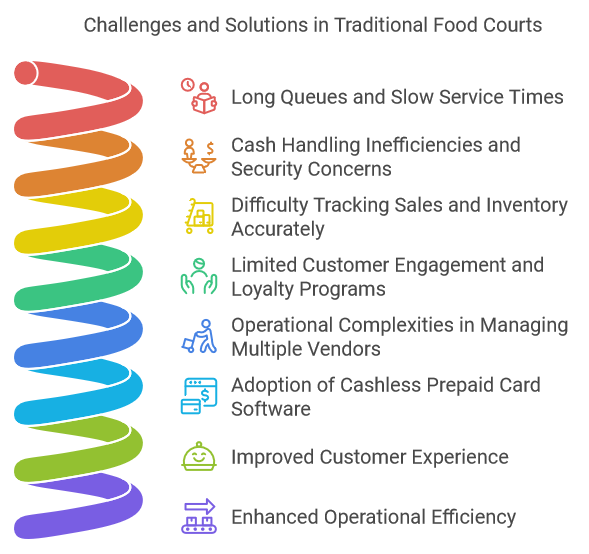
- Long Queues and Slow Service Times: One of the most prevalent issues in traditional food courts is the persistent problem of long queues. The time-consuming nature of cash transactions, combined with the complexity of managing orders across multiple vendors, often leads to significant delays. This not only frustrates customers but also limits the volume of transactions that can be processed during peak hours. As a result, potential revenue is lost, and the overall customer experience suffers. Implementing solutions on how to reduce wait times in food courts with cashless solutions becomes crucial to address this challenge.
- Cash Handling Inefficiencies and Security Concerns: Cash management is a significant burden for food court operators. It requires substantial time and resources for tasks such as counting, reconciling, and depositing cash. Moreover, handling large amounts of cash poses a considerable security risk, making the food court vulnerable to theft and errors. Ensuring secure payment options for food court operators is essential to mitigate these risks and streamline operations.
- Difficulty Tracking Sales and Inventory Accurately: In a traditional setup, accurately tracking sales and inventory across multiple vendors can be a logistical nightmare. Manual record-keeping is prone to errors and inconsistencies, making it challenging to gain a clear understanding of which items are selling well and which require restocking. Utilizing sales reporting software and robust inventory management systems are key to overcoming this challenge and optimizing stock levels.
- Limited Customer Engagement and Loyalty Programs: Building customer loyalty is paramount in the competitive food service industry. However, traditional food courts often lack the tools and data necessary to implement effective customer engagement and loyalty programs. Without a comprehensive understanding of customer preferences and purchasing habits, it's difficult to tailor personalized offers and incentives that encourage repeat business. Incorporating customer loyalty programs and leveraging customer experience improvements with cashless prepaid cards can significantly enhance customer retention.
- Operational Complexities in Managing Multiple Vendors: Coordinating operations across multiple vendors within a food court presents unique challenges. Ensuring consistent service standards, managing shared resources, and streamlining communication can be difficult without a centralized system. Implementing vendor management software and managing multiple vendors with a centralized food court system can significantly improve operational efficiency.
These challenges highlight the need for a modern, technology-driven approach to food court management. By adopting food court management systems that integrate cashless prepaid card software, operators can effectively address these issues and create a more efficient, profitable, and customer-centric environment.
The Rise of Technology in Food Service
The food service industry is undergoing a significant transformation, driven by the rapid advancements in technology and the evolving expectations of consumers. Modern diners are increasingly tech-savvy and demand convenience, speed, and personalized experiences. This shift has propelled the adoption of innovative technologies within the food service landscape, including food court management systems.
- Growing Consumer Demand for Convenience and Speed: In today's fast-paced world, time is a precious commodity. Consumers are constantly seeking ways to streamline their daily routines, and this extends to their dining experiences. Long queues and slow service are no longer acceptable, especially for busy individuals with limited time for meals. This demand for convenience has fueled the need for solutions that expedite the ordering and payment process, ultimately enhancing the customer experience improvements with cashless prepaid cards.
- Increased Adoption of Digital Payment Methods: The proliferation of smartphones and the rise of mobile wallets have made digital payments increasingly prevalent. Consumers are embracing the ease and security of contactless payments, moving away from traditional cash transactions. This trend is particularly relevant in food courts, where quick and efficient payment options are essential. The shift towards a digital payment system is reshaping how food courts operate.
Here's a quick look at some key tech trends impacting food courts:
|
Technology |
Benefit |
|
Mobile Payments |
Faster transactions, reduced wait times |
|
Online Ordering & Delivery |
Increased convenience, expanded reach |
|
Self-Service Kiosks |
Reduced labor costs, improved order accuracy |
|
Digital Menu Boards |
Dynamic updates, enhanced visual appeal |
|
Food Court Management Systems with Prepaid Cards |
Streamlined operations, data-driven insights |
In conclusion, the rise of technology in food service is revolutionizing the way food courts operate. By embracing food court management systems and other innovative solutions, operators can enhance efficiency, improve customer satisfaction, and drive significant growth in today's competitive market.
How Cashless Prepaid Card Software Integrates
Cashless prepaid card software seamlessly integrates with modern food court management systems, creating a powerful synergy that streamlines operations and enhances the customer experience. This integration offers a secure, efficient, and convenient alternative to traditional cash transactions, transforming the way food courts handle payments.
- Seamless Integration with Existing POS Systems: Cashless prepaid card software is designed to integrate seamlessly with existing food court POS system infrastructure. This compatibility ensures a smooth transition to a cashless environment without requiring a complete overhaul of the existing technology. The integration allows for real-time transaction processing, eliminating the need for separate card readers or manual entry of payment information. This streamlined approach minimizes errors and accelerates the checkout process, directly contributing to how to improve food court efficiency with prepaid cards.
- Secure Payment Processing and Data Management: Security is a paramount concern when it comes to financial transactions. Cashless prepaid card systems utilize advanced encryption and security protocols to protect sensitive customer data. The system securely stores card information and transaction details, mitigating the risks associated with cash handling and reducing the potential for fraud. This secure environment reinforces the trust between the food court operator and the customer, ensuring secure payment options for food court operators.
- Simplified Top-up and Balance Management: Customers can easily top up their prepaid cards at designated kiosks or online portals, providing a convenient way to manage their spending. The system allows customers to check their card balance in real-time, providing transparency and control over their funds. This ease of use encourages adoption of the cashless system and improves the overall customer experience.
Here's a simplified flow of how a transaction works with integrated cashless prepaid cards:
- Customer Orders: The customer places their order at a vendor within the food court.
- Payment at POS: The vendor processes the payment by scanning the customer's prepaid card at the integrated POS terminal.
- Real-time Deduction: The transaction amount is automatically deducted from the customer's prepaid card balance.
- Transaction Recorded: The food court management software with integrated payment processing records the transaction details, including the vendor, items purchased, and payment amount. This data contributes valuable insights for food court analytics.
- Receipt Generated: A digital or printed receipt is provided to the customer, confirming the transaction.
Integrating cashless prepaid card software offers several benefits related to prepaid card technology including:
- Reduced wait times: Faster transaction speeds lead to shorter queues and improved customer flow.
- Enhanced security: Reduced cash handling minimizes the risk of theft and errors.
- Improved data collection: Transaction data provides valuable insights for business intelligence.
- Increased customer loyalty: Prepaid cards can be integrated with loyalty programs and personalized offers.
By leveraging cashless prepaid card technology within a robust food court management system, operators can create a more efficient, secure, and customer-centric environment. This integration represents a significant step towards modernizing food court operations and meeting the evolving demands of today's consumers. The implementation of efficient transaction processing procedures, facilitated by this technology, ensures a smoother and faster experience for both customers and vendors.
Key Benefits of Cashless Prepaid Cards in Food Courts
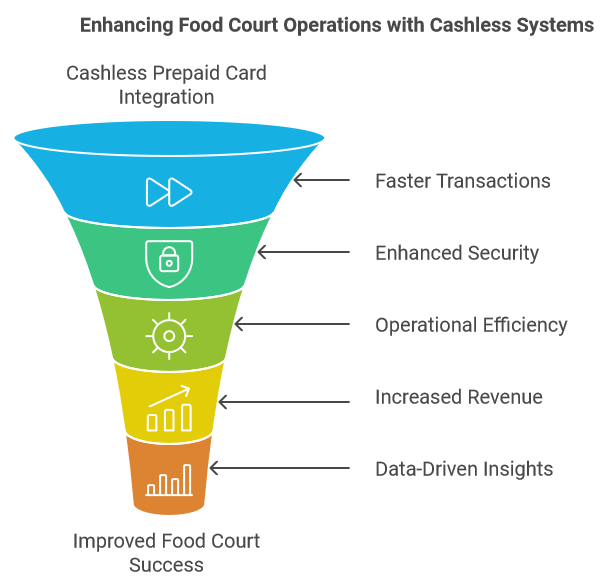
Integrating cashless prepaid card systems into food court management systems offers a multitude of benefits for both operators and customers. These advantages contribute to a more efficient, secure, and profitable food court environment. Let's explore these benefits in detail.
- Faster Transaction Speeds and Reduced Wait Times: One of the most significant advantages of cashless payments is the speed and efficiency they bring to the checkout process. Transactions using prepaid cards are significantly faster than cash transactions, eliminating the time-consuming process of counting bills and making change. This reduced transaction time translates directly to shorter queues, improved customer flow, and increased customer satisfaction. This directly addresses the common concern of how to improve food court efficiency with prepaid cards and offers effective solutions for how to reduce wait times in food courts with cashless solutions.
- Enhanced Security and Reduced Cash Handling Risks: Cashless systems minimize the need for physical cash, which significantly reduces the risk of theft, both from customers and employees. It also eliminates errors associated with manual cash handling, such as incorrect change or miscounting. This enhanced security not only protects the food court's finances but also provides peace of mind for both operators and customers, aligning directly with the need for secure payment options for food court operators.
- Improved Operational Efficiency and Cost Savings: By automating transactions and reducing the need for manual cash handling, cashless systems streamline various operational processes. This can lead to cost savings in labor, as staff can focus on customer service and other essential tasks rather than managing cash. The automation also simplifies accounting and reconciliation procedures, freeing up valuable time and resources. This overall improvement in operational efficiency in restaurants contributes significantly to the success and profitability of food courts.
- Increased Revenue and Profitability: The combination of faster service, reduced wait times, and improved customer satisfaction can lead to increased sales and revenue. Furthermore, prepaid card systems can be leveraged to implement loyalty programs and targeted promotions, incentivizing repeat business and driving customer spending. By optimizing these strategies, food court operators can maximize increasing revenue in food courts with prepaid card technology.
- Data-Driven Insights and Business Intelligence: Cashless transactions generate valuable data that can be used to gain insights into customer behavior, sales trends, and popular menu items. This data can inform strategic decisions related to menu optimization, inventory management, and marketing campaigns. The use of data analysis and reporting for food court management, driven by accurate food court analytics, helps operators understand customer preferences and tailor their offerings accordingly.
Case Study: A food court in a major shopping mall implemented a cashless prepaid card system and saw a 15% increase in transactions and a 10% reduction in average wait times within the first six months.
Here's a table summarizing the key benefits:
|
Benefit |
Impact |
|
Faster Transactions |
Reduced wait times, improved customer flow |
|
Enhanced Security |
Reduced theft and errors, increased peace of mind |
|
Improved Efficiency |
Streamlined operations, cost savings |
|
Increased Revenue |
Higher sales, repeat business |
|
Data-Driven Insights |
Informed decision-making, optimized strategies |
By embracing the benefits of using cashless cards in food courts, operators can create a more competitive and successful business model. The adoption of best prepaid card systems for food court management allows food courts to thrive in the evolving landscape of the food service industry. The focus on customer experience improvements with cashless prepaid cards ensures a loyal customer base and contributes to long-term growth.
Implementing a Cashless Prepaid Card System: Key Considerations
Implementing a cashless system requires careful planning and consideration. Choosing a food court management system with cashless capabilities involves evaluating factors like scalability, security features, and integration with existing POS systems. Comparing cashless payment options for food courts will help determine the best fit for your specific needs. Thorough staff training is essential for a smooth transitioning to a cashless system in a food hall environment. Promoting the benefits of cashless transactions to customers, highlighting the advantages of digital payments for food court vendors, encourages adoption and ensures a positive experience.
Real-World Success Stories
Numerous food courts have successfully implemented cashless systems, witnessing significant improvements in efficiency and customer satisfaction. One case study showcased a 20% increase in average transaction value after implementing prepaid cards, demonstrating the potential for increasing revenue in food courts with prepaid card technology. Another example highlighted a significant reduction in operational costs due to streamlined processes and reduced cash handling.
Future Trends
The future of food court management is increasingly digital. Mobile payments in food courts are becoming the norm, with integration into mobile apps and online ordering platforms offering seamless experiences. AI-powered personalization and recommendations, powered by effective customer relationship management (CRM), enhance customer engagement and drive sales. Sustainable and contactless solutions, like digital menu boards, cater to the growing demand for eco-friendly and hygienic practices.
Addressing Common Concerns
Q: What if a customer loses their prepaid card? A: The balance can be transferred to a new card upon verification of the customer's identity.
Q: How secure is the data? A: Reputable systems utilize advanced encryption and security protocols to protect sensitive information, providing secure payment options for food court operators.
Q: Is integration difficult? A: Most systems are designed for seamless integration with existing POS infrastructure, ensuring a smooth transition when choosing food court management software with integrated payment processing.
Q: What are the costs? A: Costs vary depending on the features and scale of the system. Exploring the best prepaid card systems for food court management reveals options that provide excellent value.
Conclusion
Food court management systems powered by cashless prepaid cards are revolutionizing the dining experience. By embracing this technology, food court operators can streamline operations, enhance security, improve customer satisfaction, and drive profitability. From faster transactions and reduced wait times to valuable data insights and personalized marketing, the benefits of using cashless cards in food courts are undeniable. Implementing a cashless system is a strategic investment in the future of your food court, ensuring you stay ahead of the curve in the ever-evolving food service industry. Contact us today to learn how our prepaid card technology can transform your food court operation.
Ready to revolutionize your food court operations and boost your bottom line?
Contact Advance Technology Systems today to explore how our cutting-edge food court management systems and cashless prepaid card solutions can transform your business.
- Visit our website: https://foodcourtbilling.com/
- Call us: +91 9810078010
- Email us: ats.fnb@gmail.com
Our team of experts is ready to answer your questions, provide a personalized demo, and help you implement the perfect solution for your food court's unique needs. Don't wait – take the first step towards a more efficient, profitable, and customer-centric food court experience. Contact us now!
Cashless Card Payment System for Canteen and Food Court
Upgrade your establishment with our Prepaid Card Software and take your business to the next level.
If you want to more information, You can reach us by phone at +91 9810078010 or by email at ats.fnb@gmail.com. Or just visit: https://www.foodcourtbilling.com