RFID vs QR Code for Employee Meal Tracking
June 5, 2026 in Blog
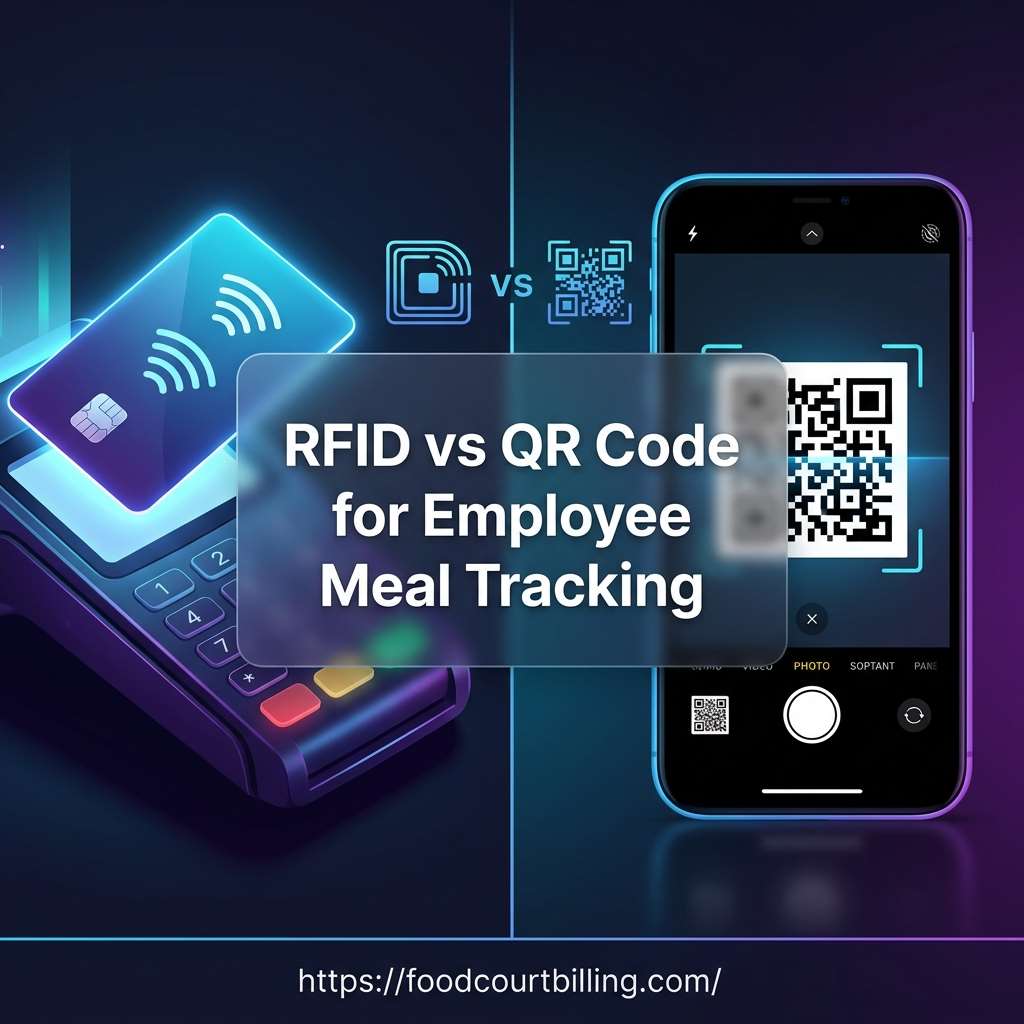
Organizations that offer subsidized meals to their staff must implement a reliable tracking mechanism. Two main technologies dominate cashless canteen systems: Radio Frequency Identification (RFID) cards and Quick Response (QR) codes. While both aim to digitalize transaction tracking, their operational efficiency, speed, and durability vary significantly in real-world canteen environments.
When selecting a meal tracking system for a corporate office, a manufacturing factory, or an institutional cafeteria, HR and IT departments often weight the pros and cons of RFID cards versus QR codes. While QR codes are popular due to mobile app integration, they present operational bottlenecks when deployed in fast-moving, high-volume canteen billing queues. In this technical comparison, we examine how both systems perform across key criteria: checkout speed, offline reliability, operational durability, and user convenience.
1. Checkout Speed and Queue Dynamics
During the lunch hour, every second counts. The billing system's speed directly determines the length of the queue.
- RFID Cards: Processing an RFID payment takes under a second. The user taps their card against the reader, the radio signal is instantly captured, and the transaction logs. The line moves continuously.
- QR Codes: Scanning a QR code takes 5 to 15 seconds. The employee must take out their smartphone, open the company portal or app, display the QR code, and align it with the scanner camera. Glare from overhead lights, low screen brightness, dirty scanner lenses, or cracked screens often cause scan failures, slowing down the line.
2. Offline Execution and Network Reliability
What happens when the company network or internet connection goes down?
- RFID Cards: The POS terminal operates on a local server network. The card tap communicates directly with the local database. It is 100% immune to internet outages and works seamlessly offline.
- QR Codes: QR codes are usually dynamic to prevent fraud (cloning screenshot codes). Generating a dynamic QR code requires the phone to have active cellular data, and the scanner to connect to cloud servers. If internet connectivity is weak or drops due to canteen crowd interference, the code fails to authenticate, halting service.
3. Device and Hardware Dependency
Who provides the hardware for identification?
- RFID Cards: The company provides the worker with a lightweight, inexpensive card. The card works independently. There is no dependency on personal devices.
- QR Codes: The system relies entirely on the employee's personal smartphone. If a worker has a dead phone battery, a broken screen, or forgot their phone at their desk, they cannot get their food, forcing staff to revert to manual logging.
4. Environmental Durability
canteen environments are hot, humid, and subject to food grease and dust.
- RFID Cards: The smart cards are plastic, waterproof, and highly durable. Even if they get wet, greasy, or dirty, the radio waves pass through easily, making them perfect for factory and construction sites.
- QR Codes: optical scanning is sensitive to the environment. Grease on the scanner glass, steam/humidity clouding the lens, or dust on the mobile screens drastically reduces scan success rates, leading to repeated scanning attempts and worker frustration.
Deploy the Right Tracking System
Advance Technology Systems (ATS) specializes in industrial-grade, offline-first RFID canteen management systems. Ensure high speed and 100% billing uptime.
Conclusion
While QR codes offer convenience for e-commerce, they fail to meet the speed and reliability requirements of active canteen registers. RFID technology remains the industry standard for employee meal tracking due to its sub-second transaction speeds, 100% offline local server reliability, and heavy-duty durability.
FAQs: RFID vs QR Codes
- Q1: Why is RFID faster than QR codes for canteen billing?
- A: RFID cards use radio waves to transmit data instantly when tapped on a reader. QR codes require a camera scanner to orient, focus, and capture the screen image, which is highly dependent on screen brightness and camera angles, making it slower.
- Q2: Can QR code meal tracking work offline?
- A: While static QR codes can work offline, dynamic QR codes require an active internet connection to generate or authorize, making them vulnerable to network drops. RFID systems run on local servers and are 100% reliable offline.
- Q3: What happens if an employee does not have a smartphone?
- A: QR code systems rely heavily on employee smartphones. If a worker lacks a phone, has a dead battery, or broken screen, they cannot collect meals. RFID cards work independently of personal mobile devices.
- Q4: Which system is more durable for factory environments?
- A: RFID cards are highly durable, waterproof, and work even when dirty. QR code scanners on mobile screens are easily disrupted by screen glare, grease, dust, or cracked glass, making RFID much better for rugged industrial sites.
Cashless Card Payment System for Food Court and Canteen
Upgrade your establishment with our Prepaid Card Software and take your business to the next level.
You Might Also Like
Explore other popular articles from our blog to learn more about modern cashless systems.