Case Study: How a Cashless School Canteen Can Improve Operational Efficiency
July 9, 2026 in Blog
Educational institutions are increasingly adopting digital solutions to improve campus operations. While digital classrooms and automated attendance are standard, school canteens have often lagged behind, relying on legacy cash collections or paper coupon systems. This case study examines a private school with 2,500 students that transitioned from a cash-based cafeteria to a closed-loop cashless RFID system. The results demonstrate a significant improvement in queue speeds, parent satisfaction, and overall revenue security.
For school administrators, educational trusts, and catering contractors evaluating the operational impact of cashless systems, this case study provides valuable data. To explore our high-speed school card solutions, visit our dedicated Cashless School Card page.
The Challenge: Recess Line Bottlenecks & Cash Leakage
Before implementing the cashless system, the school faced significant challenges during the daily 20-minute recess lunch break. With hundreds of students rushing to the canteen simultaneously, cashier registers faced major bottlenecks. Counting physical currency, calculating loose change, and handling paper coupons took up to 30 seconds per transaction. This delay resulted in long queues, preventing many students from purchasing lunch in time. Additionally, cash handling led to counting errors, card sharing disputes, and manual reconciliation discrepancies at the end of the day, resulting in estimated revenue leakage of 10% to 15%.
The Solution: Closed-Loop RFID & Local Server Architecture
The school implemented a hybrid cashless system utilizing contactless RFID cards and a local server network. Every student was issued a personalized smart card linked to a parent-managed account. The school set up central kiosks for recharges and installed rugged Windows POS terminals at all food counters. Key aspects of the solution included:
- Sub-Second RFID Payments: Students tap their card to pay, completing the transaction in less than a second and moving the line continuously.
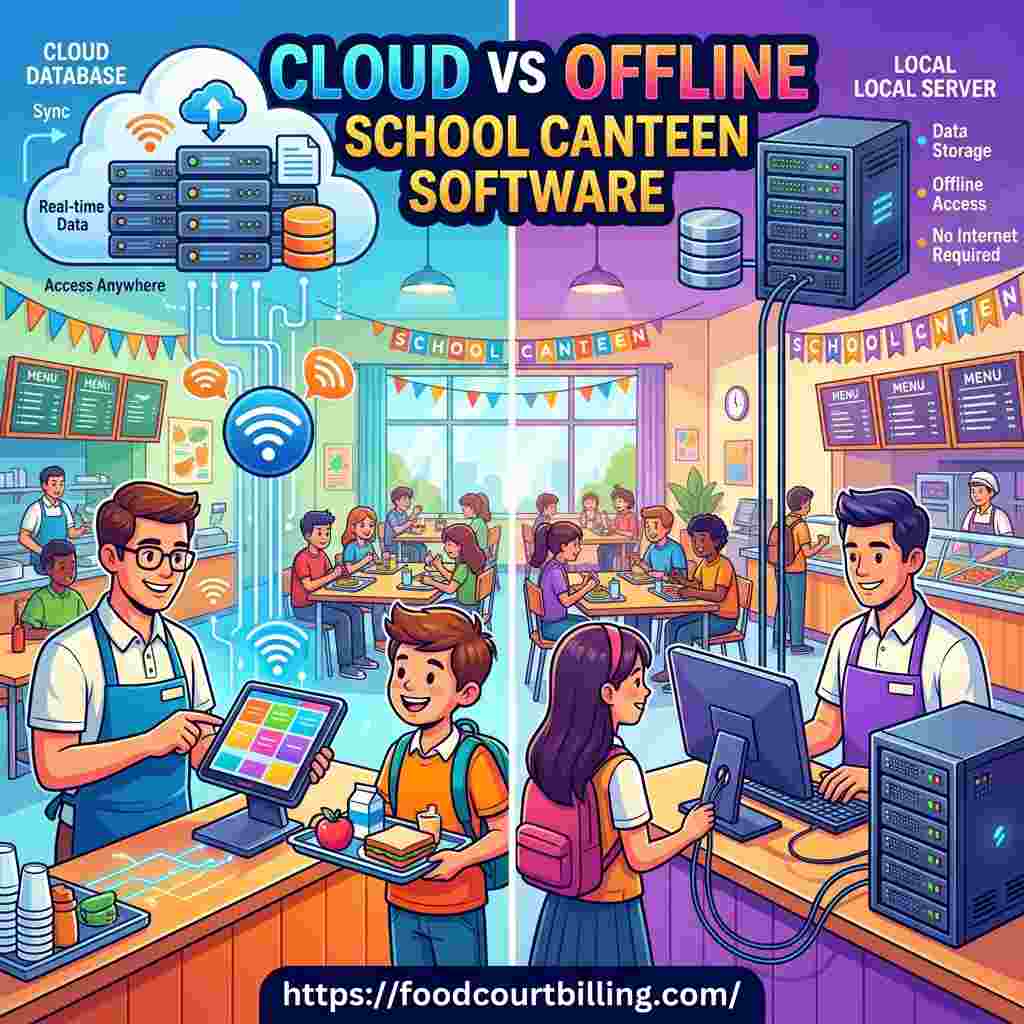
- Local Server Integration: Taps are verified against a local server database, ensuring registers remain 100% online during external internet outages.
- Photo-Verification: Tapping a card displays the student's photo on the cashier's screen, preventing card trading and unauthorized use.
Operational Impact: Faster Service & Reduced Wastage
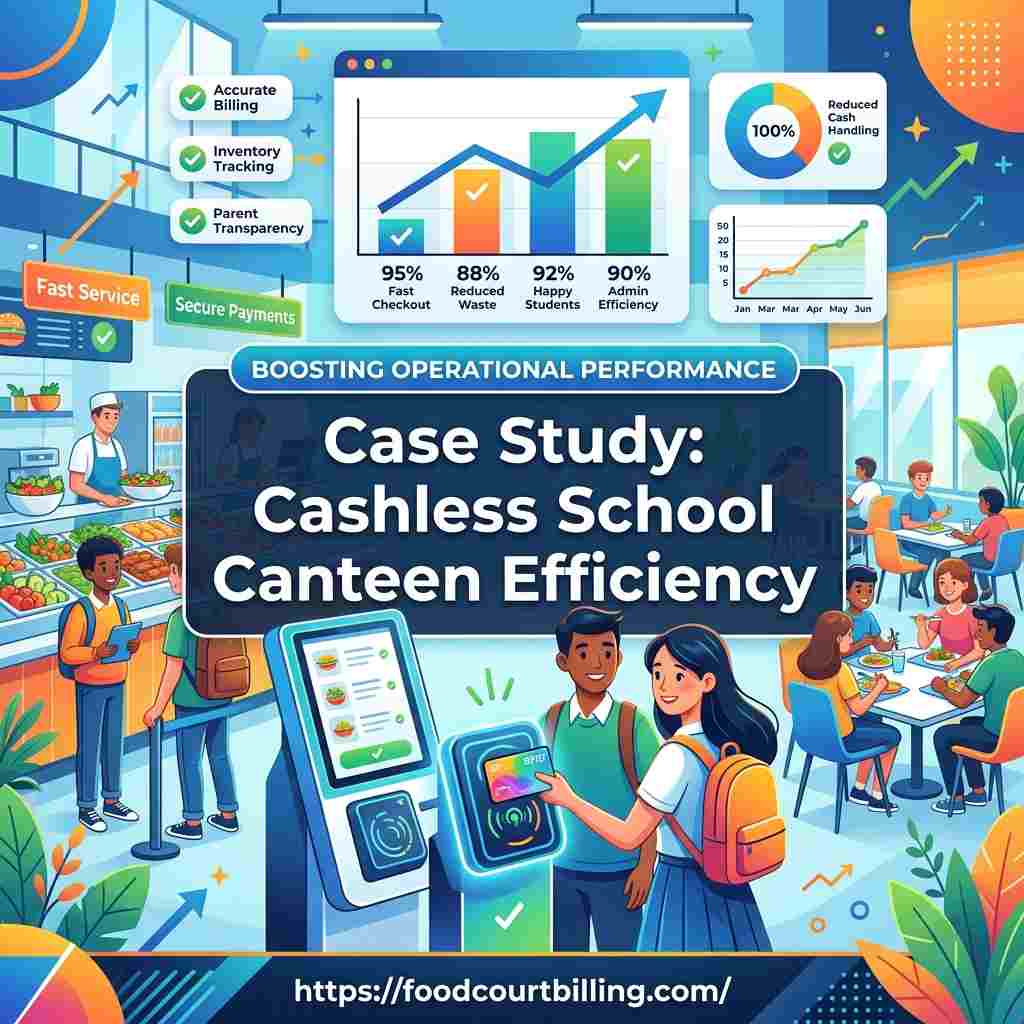
The transition to a cashless RFID system immediately resolved queue bottlenecks. Average checkout times dropped by 75%, allowing cashiers to serve three times as many students per minute. Shorter lines enabled the canteen to capture sales that were previously lost due to abandoned queues. Additionally, real-time sales reporting integrated with inventory management allowed the kitchen team to monitor ingredient consumption, leading to a 15% reduction in over-prepared food and raw material waste.
Parental Satisfaction & Financial Audit Security
Parents welcomed the new system, with over 92% reporting positive feedback. Parents appreciated the convenience of online UPI recharges, the ability to monitor their child's food choices, and the peace of mind that lunch funds could not be lost or stolen. For the school management, eliminating cash drawers from food counters secured all revenue. Tracked cafeteria revenue rose by 18% in the first month, and automated sales logs simplified end-of-week vendor reconciliations and audits.
Conclusion & ROI Timeline
This case study demonstrates that going cashless is a highly effective way to improve school canteen operations. The school recovered its initial software and hardware setup costs within the first 6 months. By eliminating cash-handling bottlenecks, securing revenue, and reducing food waste, the offline-first RFID system delivered a modern, healthy, and highly efficient dining experience for the entire campus.
Transform Your School Canteen
Advance Technology Systems (ATS) provides offline-first RFID school canteen billing systems and parent portal integrations with transparent pricing.
Conclusion
Choosing an RFID school card system requires analyzing speed, offline reliability, parental features, and backend auditing. By asking these fifteen questions during vendor evaluations, your school can select a secure, robust cashless solution that operates smoothly and protects cafeteria revenue.
FAQs: School Canteen Operational Efficiency Case Study
- Q1: What was the main operational challenge before going cashless?
- A: Before implementing the cashless system, the school experienced long queues during the 20-minute recess, high cash handling errors by cashiers, manual paper coupon auditing discrepancies, and parental anxiety over lost pocket money.
- Q2: How did RFID smart cards improve canteen queue speeds?
- A: Contactless RFID cards allowed students to pay with a single card tap. The transaction time dropped from 30 seconds (counting cash and returning loose change) to less than a second per student, cutting line wait times by 75%.
- Q3: Did the cashless system reduce school cafeteria food wastage?
- A: Yes. Real-time transaction reporting enabled kitchen managers to track menu popularity and ingredient consumption, leading to a 15% reduction in over-preparation and raw material waste.
- Q4: How did parents respond to the cashless lunch card implementation?
- A: Over 92% of parents reported positive feedback, citing the convenience of online UPI recharges, the ability to view daily meal logs, setting daily spending limits, and the peace of mind that lunch funds could not be lost or stolen.
- Q5: Was there any revenue recovery after eliminating cash registers?
- A: Yes. The case study school documented an immediate 18% increase in tracked sales. This recovery resulted from eliminating cashier manual errors, card sharing, and unauthorized cash collections by staff.
- Q6: Does the school canteen system operate if the main campus internet goes down?
- A: Yes. The system utilizes an offline-first local network server, ensuring registers process smart card taps instantly with 100% uptime, unaffected by external internet connection drops.
- Q7: How are card balances protected if a student loses their RFID card?
- A: The student reports the loss to the administration. The admin blocks the card ID instantly in the central system, protecting the balance, and transfers the funds to a newly registered RFID card in seconds.
- Q8: What was the return on investment (ROI) timeline for the cashless upgrade?
- A: The school recovered the initial software and hardware setup costs within the first 6 months, driven by increased sales velocity, food waste reduction, and eliminated cash leakage.
Case Study: Cashless School Canteen Efficiency
Upgrade your school cafeteria with our prepaid card software and experience seamless operations.