How Construction Companies Track Worker Meals
June 5, 2026 in Blog
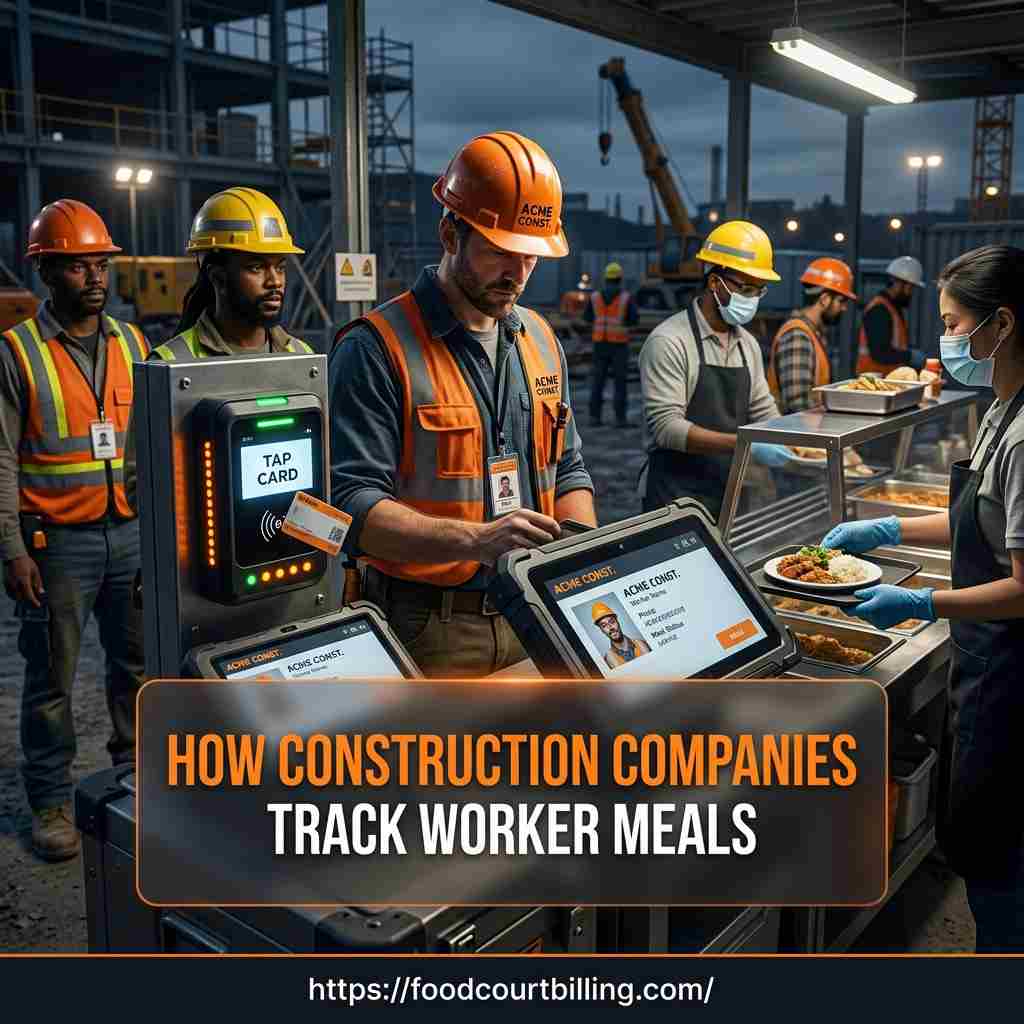
Construction projects rely on large workforces comprising various contracting agencies. Feeding these workers on-site is crucial for productivity, but tracking meal consumption in remote, rugged, and network-devoid construction environments is a major logistical challenge.
At massive infrastructure projects—such as highways, power plants, real estate developments, or oil refineries—canteens are set up in temporary, dusty tents or structures. These remote locations often suffer from poor mobile signals and completely lack high-speed broadband internet. Traditional billing systems, credit card terminals, and cloud-based POS software fail constantly due to connectivity drops. Reverting to physical coupons creates administrative overhead, invoice disputes, and financial leakages. To bypass these issues, construction companies are switching to rugged, offline RFID-based meal tracking systems.
The Challenge of the Rugged Environment
Construction sites present specific challenges that standard office software cannot handle:
- Dust and Grime: Optical scanners (such as QR codes or barcode readers) quickly fail as dust and grease settle on lenses. Fingerprint biometric readers get blocked by soil or calloused worker hands.
- No Internet: Cloud connections are unreliable or non-existent at remote infrastructure developments.
- Dynamic Workforce: Workers are hired, reassigned, or leave daily, making manual lists impossible to maintain accurately.
RFID: The Industrial Solution
Radio Frequency Identification (RFID) provides the durability required for construction. Each worker is issued a plastic RFID card (often slotted inside their hard hat or badge holder). These smart cards are highly durable, waterproof, and unaffected by dust or grease. The card reader uses radio waves, allowing worker identity verification without direct physical contact or clean optical lines of sight.
How Offline Local Servers Ensure Uptime
To address the internet challenge, construction canteens deploy a local server database on-site. The POS terminals at the food distribution counters communicate directly with this local server. Transactions are validated locally, taking less than a second per worker tap. At the end of the day, or when a temporary network connection is established, the local server syncs the consolidated meal logs with the main corporate office database. This offline-first pipeline ensures the canteen remains operational 24/7 with zero transaction delays.
Automated Reconciliation and Invoice Settlement
At the end of a billing cycle, the construction company's HR department can generate comprehensive reports detailed by contracting agency. These reports show exactly how many meals were consumed by each agency's workers, simplifying final settlements. This transparency resolves billing disputes, eliminates duplicate claims, and prevents contractors from paying for meals that were never actually served.
Secure Your Construction Site Canteen
Advance Technology Systems (ATS) provides heavy-duty, offline RFID canteen tracking systems built specifically for construction and industrial environments.
Conclusion
Construction canteen tracking requires systems that are durable, fast, and 100% reliable offline. Replacing manual paper logs with an offline-first RFID card solution allows construction companies to track worker meals accurately, prevent double-claims, and automate invoice settlements with ease.
FAQs: Construction Worker Meal Tracking
- Q1: How do construction companies track worker meals on remote sites?
- A: They deploy offline-first canteen systems using portable POS machines or local computers connected to local network databases, allowing workers to verify eligibility via RFID cards without active internet.
- Q2: Why are paper coupons bad for construction sites?
- A: Paper coupons easily tear, get lost in rugged conditions, and are prone to double-claiming. Digital RFID cards are heavy-duty, waterproof, and represent a secure digital profile.
- Q3: How does the offline system synchronize data?
- A: The transactions are stored locally on the site server database. When network connectivity is established or when data is backed up, it automatically syncs with the main corporate offices.
- Q4: Can we set daily meal limits for construction workers?
- A: Yes. The software allows you to enforce strict limits, such as one lunch and one dinner per card per day, automatically preventing duplicate distributions.
Cashless Card Payment System for Food Court and Canteen
Upgrade your establishment with our Prepaid Card Software and take your business to the next level.
You Might Also Like
Explore other popular articles from our blog to learn more about modern cashless systems.