RFID vs Biometric Systems for Canteen Management
June 5, 2026 in Blog
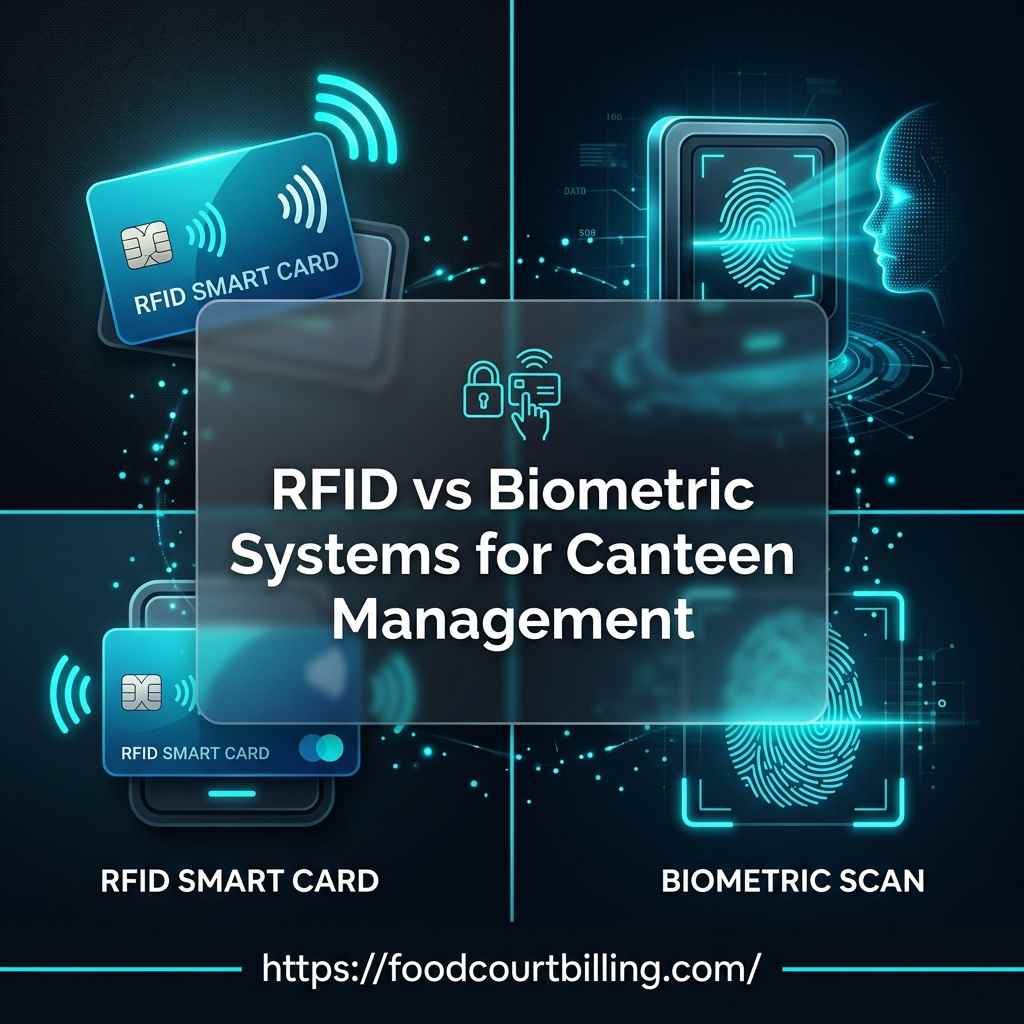
Organizations transitioning to cashless canteens must select an identification technology to verify employee meal eligibility. The two primary options are Radio Frequency Identification (RFID) smart cards and biometric systems (fingerprint or facial scanners). While biometrics prevent card sharing, RFID cards remain the industry standard due to superior processing speed and hygiene.
For high-volume cafeterias in factories, corporate campuses, and schools, selecting the right verification hardware is critical. A slow scanner will create long register queues during lunch hours, impacting employee rest times. HR and IT departments weight the security benefits of biometric systems against the speed and durability of RFID cards. Let's compare both technologies across key operational criteria.
1. Transaction Speed and Queue Throughput
canteen billing systems require fast checkout processing to prevent queues from backing up.
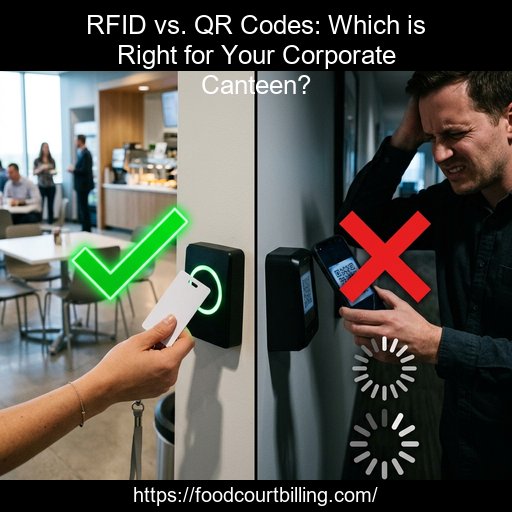
- RFID Cards: Processing an RFID card tap takes less than a second. The cashier selects the menu items on screen, the worker waves their card, and the transaction is complete, allowing registers to handle thousands of workers quickly.
- Biometric Systems: Scans take 3 to 10 seconds. Fingerprint readers require placing fingers flat, and optical scanners must focus. Facial recognition can be slowed by lighting angles or worker movement. Any scan delay adds up, causing bottlenecks.
2. Durability in Rugged Environments
Industrial manufacturing and construction canteens operate in dusty, humid environments.
- RFID Cards: Plastic RFID cards are highly durable, waterproof, and unaffected by grease or dust. The card readers transmit data using radio waves, requiring no direct optical paths.
- Biometric Systems: Optical lenses and glass scanners get clouded by airborne dust, humidity, or grease from food counters. Furthermore, factory laborers often have calloused, dry, or soiled fingers, which frequently cause biometric fingerprint scanners to fail.
3. Hygiene and Contactless Safety
canteen checkout registers operate right next to food service counters, making sanitization critical.
- RFID Cards: RFID readers are completely contactless. The card only needs to be waved within a few centimeters of the terminal, requiring zero physical contact and promoting cleanliness.
- Biometric Systems: Fingerprint systems require physical contact with a dirty scanner glass. Having hundreds of workers touch the same sensor before eating is unhygienic. Facial scanners are contactless but remain slow.
4. Proxy Card Tapping vs. Verification Security
The primary advantage of biometrics is biometric security—workers cannot share their fingerprints or faces to collect extra meals for coworkers. However, modern RFID canteen software prevents proxy tapping by locking a card once it has been tapped during a meal session. If a worker attempts to double-claim, the system blocks the transaction, securing the subsidy budget without requiring slow biometric scans.
Deploy the Right Billing Hardware
Advance Technology Systems (ATS) provides state-of-the-art offline RFID and biometric canteen billing solutions designed for high speed and durability.
Conclusion
While biometric systems offer security against card sharing, their slow transaction speeds and unhygienic contact sensors make them less suitable for busy canteens. Contactless RFID cards remain the superior choice due to sub-second payment times, high durability, and completely touchless verification.
FAQs: RFID vs Biometrics
- Q1: Which system has a faster transaction time, RFID or biometrics?
- A: RFID cards are significantly faster. Tapping an RFID card takes under a second. Biometric fingerprint or facial scanners require optical alignment, focal capture, and algorithm checks, taking 3 to 10 seconds per worker, which creates bottlenecks in high-volume queues.
- Q2: Is biometric scanning hygienic for canteens?
- A: Fingerprint biometrics require physical contact with a dirty scanner glass, which is unhygienic in eating spaces. Contactless RFID card taps require zero physical contact, promoting a cleaner environment.
- Q3: Can workers share RFID cards to collect extra meals?
- A: While workers can try to share cards, the canteen software prevents duplicate meal claims by locking further transactions on that card once it has been tapped during a meal session.
- Q4: Which system is more reliable for factory laborers?
- A: RFID cards are highly reliable. Factory workers often have soiled, dusty, or calloused hands, which frequently cause biometric fingerprint readers to fail, making RFID the more robust option.
Cashless Card Payment System for Food Court and Canteen
Upgrade your establishment with our Prepaid Card Software and take your business to the next level.
You Might Also Like
Explore other popular articles from our blog to learn more about modern cashless systems.