How Cashless Canteens Reduce Billing Disputes
June 5, 2026 in Blog
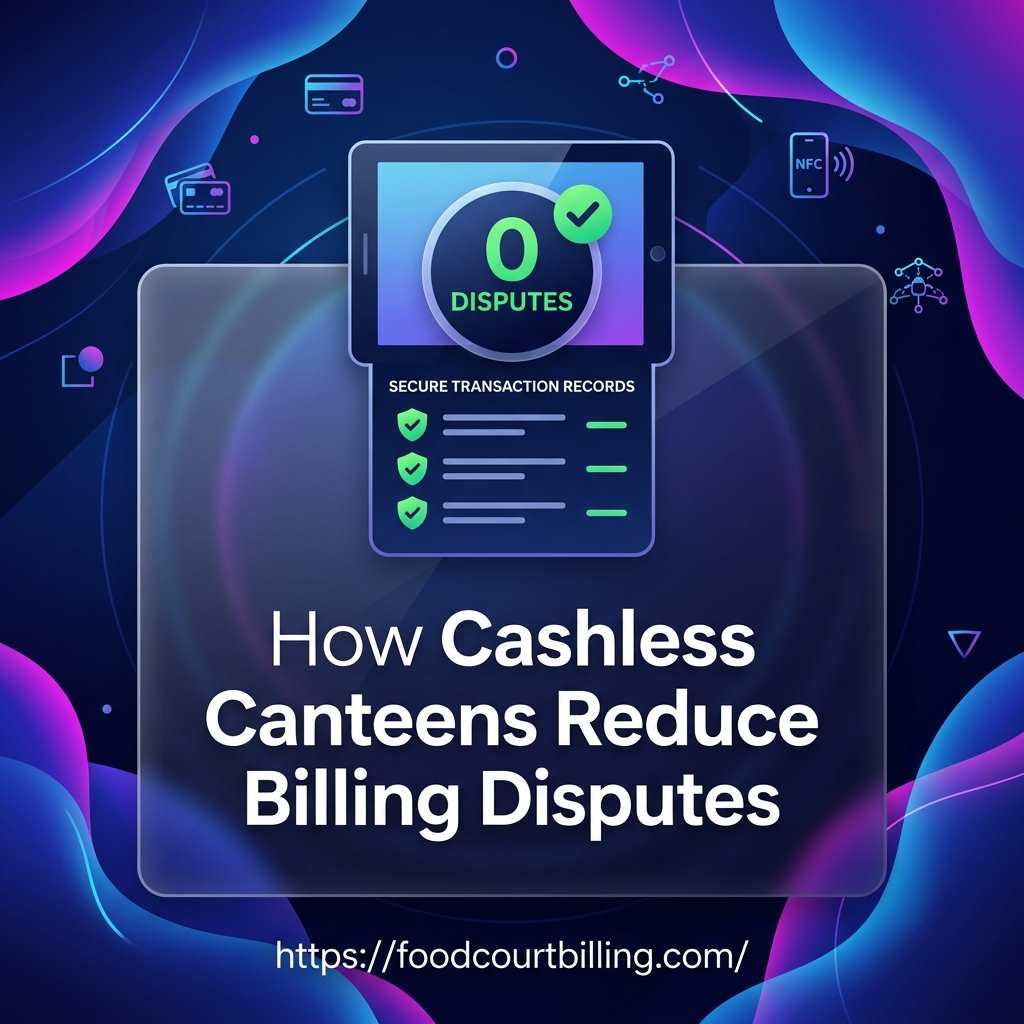
In a busy corporate or factory canteen setting, billing is rarely simple. With food vendors, corporate clients, third-party contractors, and employees all involved in meal subsidy equations, invoicing discrepancies are common. Implementing a cashless canteen billing system eliminates these disputes by providing a single, digital source of truth.
In traditional canteen systems that use paper coupons, log books, or manual registers, disputes occur regularly. Caterers claim they served 500 meals, while the corporate client's HR claims only 420 workers were active. Employees argue they were charged twice, or that they never received their lunch token. Reconciling these claims takes hours of administrative labor and strains business relationships. A cashless canteen system resolves these friction points by digitalizing every transaction in real-time.
Unalterable Digital Audit Trails
The primary weapon against billing disputes is an unalterable digital log. Every time an employee taps their RFID card at a food station, the transaction records:
- The unique card ID and employee name.
- The exact date and time.
- The specific vendor counter and food items purchased.
- The exact transaction value and subsidy split.
If a vendor submits an invoice that does not match company active counts, HR does not have to search through piles of paper coupons. They can instantly generate a transaction audit log detailing every single meal served. The data is indisputable, eliminating billing arguments immediately.
Eliminating Token Sharing and Double-Claiming
In manual coupon models, workers can collect multiple meal tokens or share their coupons with visitors, resulting in the company paying for unauthorized meals. The cashless system prevents this by setting strict usage rules in the central software. If a card is configured for "one lunch per day," the terminal rejects any duplicate taps within the lunch window. This blocks double-claiming and secures the corporate subsidy budget.
Real-Time Balance and Deduct Transparency
Employees often dispute charges if they lack visibility into their canteen spending. By utilizing smart card systems, employees can check their transaction histories and remaining card balances at balance kiosks or during checkout. This transparency assures workers that they are billed accurately for their meals, preventing disputes at the register.
Resolve Canteen Disputes Automatically
Advance Technology Systems (ATS) provides secure, offline-first RFID canteen software that creates flawless audit trails and prevents billing disputes.
Conclusion
Manual canteen tracking belongs in the past. Transitioning to a cashless RFID system resolves invoicing disputes, prevents double-claiming, and provides an auditable database trail, helping companies protect their budgets and secure vendor relations.
FAQs: Reducing Canteen Disputes
- Q1: Why do manual canteens experience billing disputes?
- A: Manual canteens rely on paper logs, hand-counted tokens, or cash change, which are prone to mathematical mistakes, duplicate token collections, unauthorized meal distributions, and lost records.
- Q2: How does a cashless system resolve invoice mismatches?
- A: Every transaction is digitally recorded in real-time, linking the exact worker ID, menu items collected, cost, timestamp, and vendor, creating an unalterable audit trail.
- Q3: Can workers verify their own transaction history?
- A: Yes, depending on software configurations, employees can view their account histories, loaded balances, and deduct histories via terminal kiosks or admin portals.
- Q4: How does the system benefit corporate accounting?
- A: It automates monthly reconciliations, separating company subsidies, contractor billings, and vendor dues instantly, reducing manual sorting labor to zero.
Cashless Card Payment System for Food Court and Canteen
Upgrade your establishment with our Prepaid Card Software and take your business to the next level.
You Might Also Like
Explore other popular articles from our blog to learn more about modern cashless systems.