RFID vs. Cash: Why Schools Are Switching to Cashless Canteen Systems
May 15, 2025 in Blog
The era of fumbling for loose change is ending. Explore the benefits of RFID cashless systems over traditional cash payments in school canteens for a modern secure dining experience.
The traditional sight of students fumbling with coins and currency notes at school canteens is rapidly becoming obsolete. Across India and globally educational institutions are embracing RFID based cashless payment systems transforming the way students purchase meals and snacks on campus. This shift from cash to contactless smart cards represents more than just a technological upgrade it is a fundamental reimagining of school canteen operations that delivers tangible benefits for administrators parents and students alike.
The Cash Conundrum in School Canteens
Cash handling in school canteens has long presented significant challenges. Students often lose lunch money creating stress for both children and parents. Canteen staff spend valuable time counting change reconciling daily sales and securing cash collections. The risks of theft human error and financial discrepancies create ongoing administrative headaches. During peak lunch hours long queues form as students wait for manual cash transactions eating into precious break time.
Beyond operational inefficiencies cash based systems offer limited visibility into student spending. Parents cannot monitor purchases or set spending limits. Schools lack data insights for healthier menu planning or inventory management. The inability to track what students are buying leaves a gap in understanding nutritional habits and operational demand.
Understanding RFID Technology in School Canteens
RFID technology uses electromagnetic fields to automatically identify and track tags attached to objects. In school canteens students carry RFID enabled cards that communicate with card readers at payment terminals. When a student taps their card the system instantly processes the transaction deducting the amount from their prepaid balance.
Modern RFID systems integrate seamlessly with existing student ID cards eliminating separate payment cards. Parents load funds through secure online portals or kiosks creating a comprehensive digital record of every transaction. This integration simplifies the daily routine for students who now need only one card for attendance library access and meals.
Speed and Efficiency: The Immediate Impact
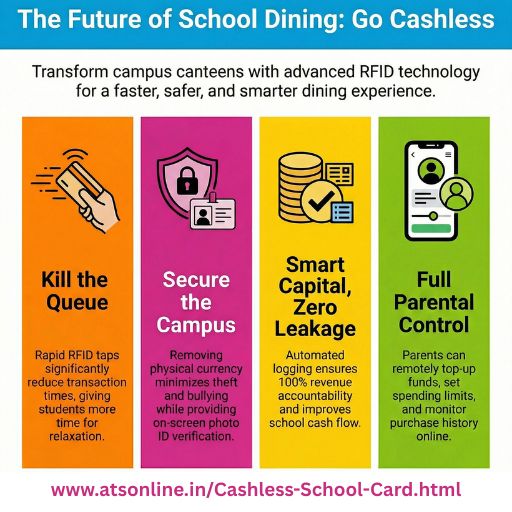
The most noticeable benefit of RFID systems is transaction speed. A tap and go payment takes mere seconds compared to cash transactions requiring change calculations. This acceleration dramatically reduces canteen queuing times particularly during peak lunch periods.
For a school with hundreds of students the time savings are substantial. Students reclaim valuable break time for relaxation and socializing. Canteen staff experience reduced pressure and can focus on food quality rather than cash handling. The improved efficiency often allows schools to serve more students without requiring additional infrastructure or staff during the lunch rush.
Enhanced Security and Reduced Risk
Cash elimination addresses multiple security vulnerabilities. Physical currency handling exposes schools to theft risks and requires secure storage and bank transportation. RFID systems dramatically reduce these concerns through digital transactions with comprehensive audit trails.
Lost or stolen cards can be immediately deactivated with balances transferred to replacement cards. On screen photo verification ensures cards are used by rightful owners. Without visible cash instances of bullying related to lunch money significantly decrease promoting a more inclusive and safe environment for all students.
Parental Control and Transparency
Perhaps the most appreciated feature for parents is the unprecedented visibility and control over their children's spending. Through dedicated online portals or mobile applications parents can monitor every canteen purchase in real time. They can set daily or weekly spending limits ensuring children do not overspend or make excessive purchases.
This transparency extends to nutritional awareness. Parents can review what their children actually consume during school hours enabling informed conversations about healthy eating habits. Some advanced systems even allow parents to restrict purchases of specific items like sugary snacks or beverages empowering them to encourage better nutritional choices. The convenience of remote top ups eliminates morning rushes to arrange cash ensuring children always have access to meals.
Financial Advantages for Schools
While initial RFID infrastructure investment requires consideration long term financial benefits are compelling. Schools typically recover costs within the first academic year through multiple channels. Many institutions implement nominal card issuance fees creating a self funding model. The prepaid balance model generates working capital float improving cash flow.
Cash handling elimination reduces administrative costs for daily reconciliation and bank deposits. Digital records simplify accounting and provide detailed sales data for informed decision making. Reduced food wastage through better demand forecasting further improves financial performance turning the canteen into a more efficient operation.
Hygiene and Modern Campus Experience
In the post pandemic era contactless transactions have become hygiene necessities. RFID cards eliminate physical currency exchange reducing touchpoints and disease transmission risks. The modern tech forward image projected by cashless systems enhances school reputation and positions institutions as progressive.
This technological adoption often extends beyond canteens to library systems event ticketing and other campus services creating a unified smart campus ecosystem. It prepares students for a digital world where cashless transactions are the norm.
The Verdict: Why RFID Wins
The comparison between RFID and cash systems reveals clear winners. While traditional cash systems seem simple they create ongoing operational drains security vulnerabilities and missed improvement opportunities. RFID based cashless canteen systems represent smart investments delivering compounding returns.
Schools making the transition report overwhelming positive feedback. Students appreciate faster service. Parents value transparency and control. Administrators benefit from reduced workload and improved security. Implementation is straightforward particularly when systems integrate with existing infrastructure.
As educational institutions modernize operations cashless canteen systems have evolved from innovations to essential infrastructure. The question for forward thinking schools is how quickly they can implement RFID technology to realize its benefits.
Why Partner with Advance Technology Systems
Choosing the right partner is critical for a smooth transition to a cashless system. Advance Technology Systems specializes in providing robust secure and user friendly RFID solutions tailored for educational institutions. Our systems are designed to handle high transaction volumes with ease ensuring reliability when it matters most.
We offer end to end support from installation to training and ongoing maintenance. Our platform integrates seamlessly with parent portals and school administration software providing a cohesive experience. We understand the unique needs of schools and offer features like dietary restrictions alerts and subsidy management built right into the core system.
By partnering with us schools gain a technology ally committed to improving student welfare and operational efficiency.
Conclusion
The move from cash to RFID in school canteens is a definitive step towards modernization. It solves practical problems of speed and security while opening new avenues for parental engagement and nutritional monitoring. The operational efficiencies gained by the school administration translate directly into cost savings and better service.
You can reach us by phone at +91 9810078010 or by email at ats.fnb@gmail.com.
In a world that is increasingly digital keeping cash as the primary mode of payment in schools feels outdated and inefficient. The benefits of a cashless system are comprehensive touching every stakeholder in the school ecosystem. It is cleaner faster safer and smarter.
The future of school dining is digital. Embracing RFID technology is not just about changing how students pay for lunch it is about enhancing the entire educational environment.
Ready to transform your school canteen?
Discover how ATS Online's cashless school card system can revolutionize your campus dining experience with seamless RFID technology comprehensive parental controls and proven financial benefits. Contact us today at www.atsonline.in to learn more about implementing a modern secure and efficient cashless payment solution tailored to your institution's needs.
Upgrade your campus today and experience the difference of a truly modern payment solution.
FAQs: RFID vs Cash in Schools
- Q1: How does RFID technology improve lunch line speed?
- A: RFID systems enable tap and go payments that take mere seconds. This is significantly faster than cash transactions which require counting money and giving change dramatically reducing wait times for students.
- Q2: Can parents see what their children are buying?
- A: Yes the system provides complete transparency. Parents can log into an online portal or mobile app to view every transaction in real time allowing them to monitor spending habits and nutritional choices.
- Q3: Is it safer than carrying cash?
- A: Absolutely. Eliminating cash removes the risk of theft or loss. If an RFID card is lost it can be instantly deactivated and the balance transferred to a new card keeping the money secure.
- Q4: Does the system help with school administration?
- A: Yes it reduces the administrative burden of counting cash and reconciling daily sales. Digital records simplify accounting and provide valuable data for inventory management and menu planning.
- Q5: Is the system hygienic?
- A: In the post pandemic era contactless payments are essential. RFID cards eliminate the exchange of physical currency reducing touchpoints and the risk of germ transmission in the cafeteria.
You Might Also Like
Explore other popular articles from our blog to learn more about modern cashless systems.